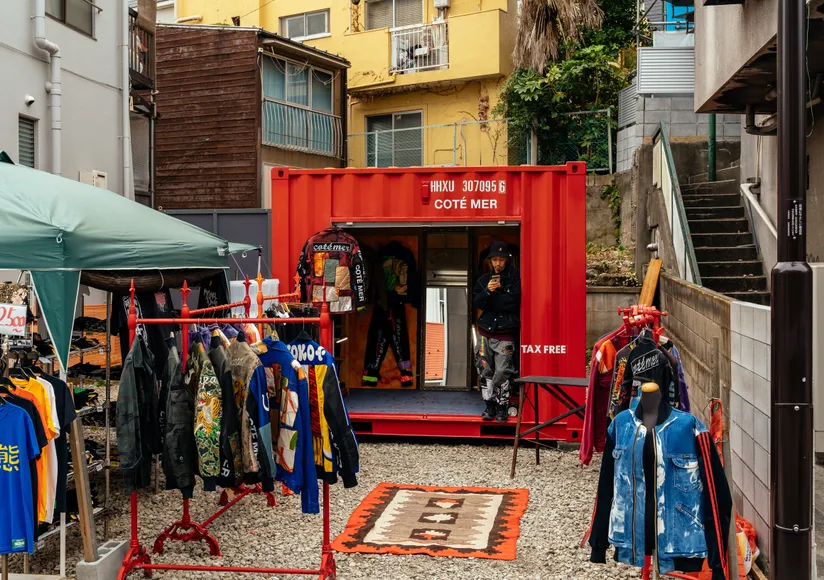
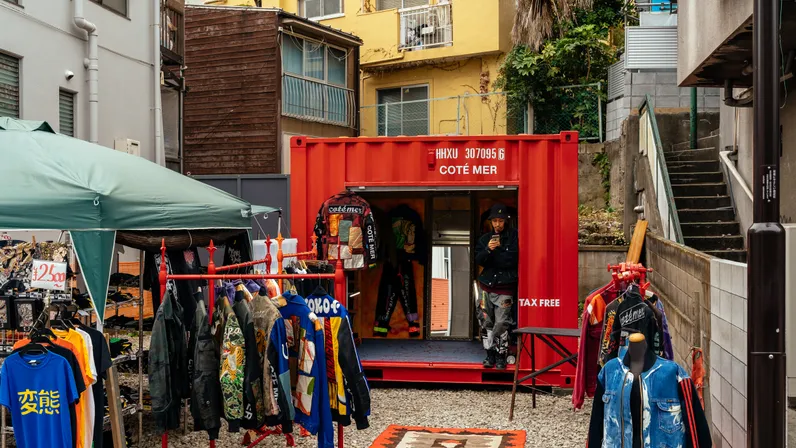
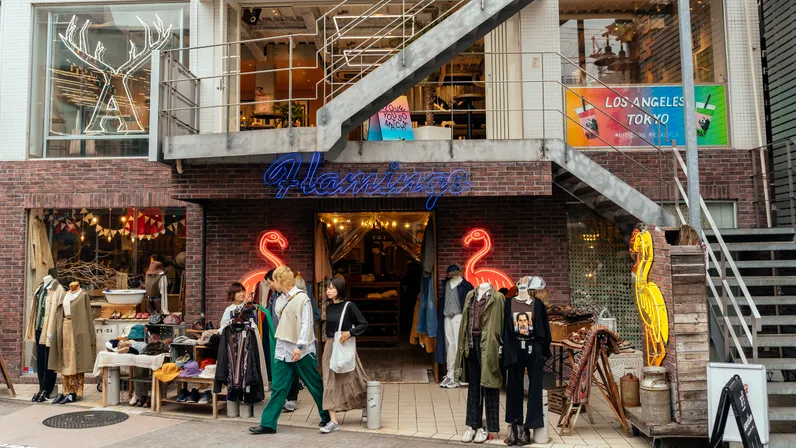
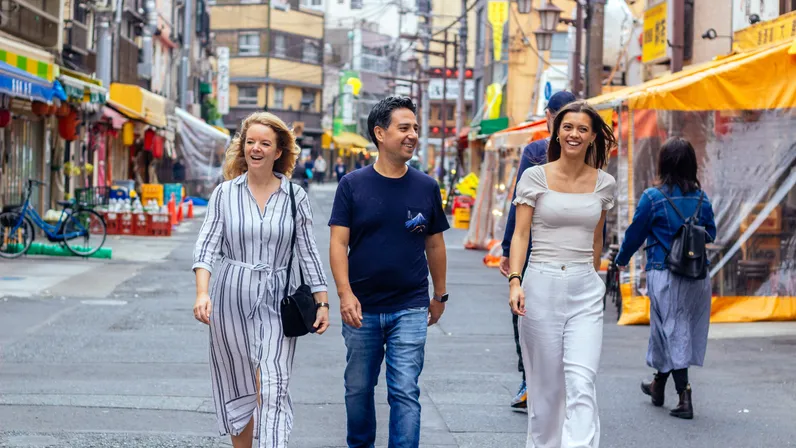
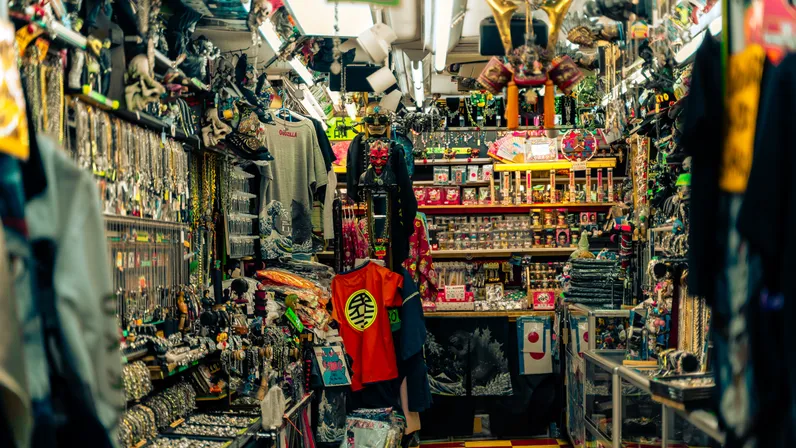
Japan has the best secondhand clothing in the world, for a specific reason: things are looked after here, deadstock survives, and there is no stigma attached to buying used. Shimokitazawa is where that concentrates. It is fifteen minutes from Shibuya, it has no real chain presence, no cars in most of its lanes, and around two hundred vintage shops.
You meet your host at the station, which is itself part of the story. The railway was moved underground and the strip of land it freed up has been given over to low buildings and walkways rather than towers, which is unusual for Tokyo and is why the neighbourhood still feels the way it does.
Then you shop, or at least you look properly. Your host takes you through the different kinds of place, because they are not the same: the by-the-kilo warehouses, the curated Americana dealers with 1950s workwear at serious prices, the cheap student rails, and the specialists in one thing only, band shirts, kimono fabric, Hawaiian shirts, military. You learn how to read a price tag, what deadstock means, and how to tell a genuine piece from a reproduction, which is the useful skill you take home.
In between there are the record shops, some of them thirty or forty years old, and the tiny live houses that made this the home of Japanese indie music. Your host explains what a live house actually is and how the scene here works.
You stop for a coffee, included, at one of the cafes the neighbourhood is also known for, and finish at Kitazawa Hachiman, the local shrine, where your host tells you about the autumn festival when the whole district turns out.
A practical note: nobody pushes you to buy anything, and your host will happily just walk and explain. Many of the small shops open around midday and some close on Wednesdays, so the tour starts from 11:00 onwards. Bring a bag if you think you might buy.