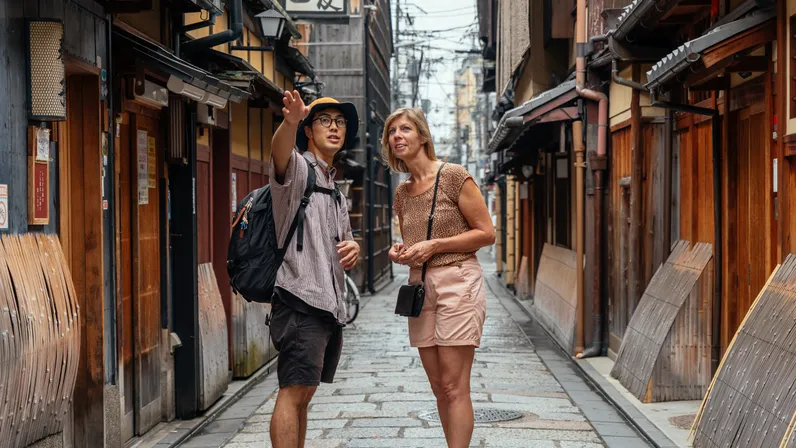
This is the antidote to a Kyoto temple checklist. No timed tickets, no coach parties, one shrine, one river and a picnic, in the northern part of the city where students and families actually spend their weekends.
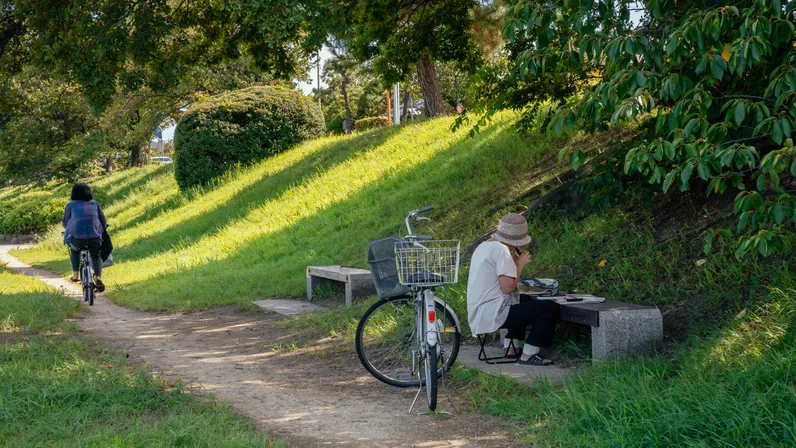
You meet your host at the delta, the grassy fork where the Takano and the Kamo rivers join. It is where Kyoto comes to sit: people practising instruments, dogs, someone asleep on the bank. The stepping stones across the water are carved as turtles and plovers and everybody crosses on them, including you.
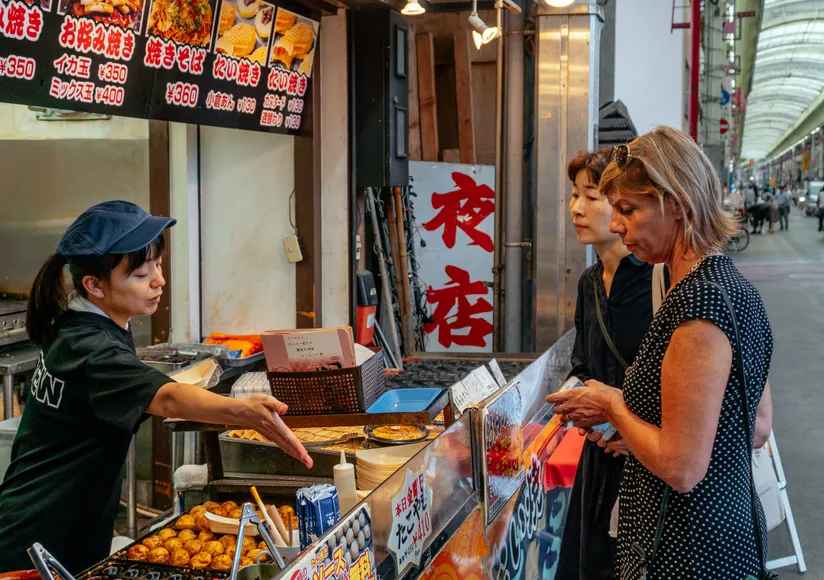
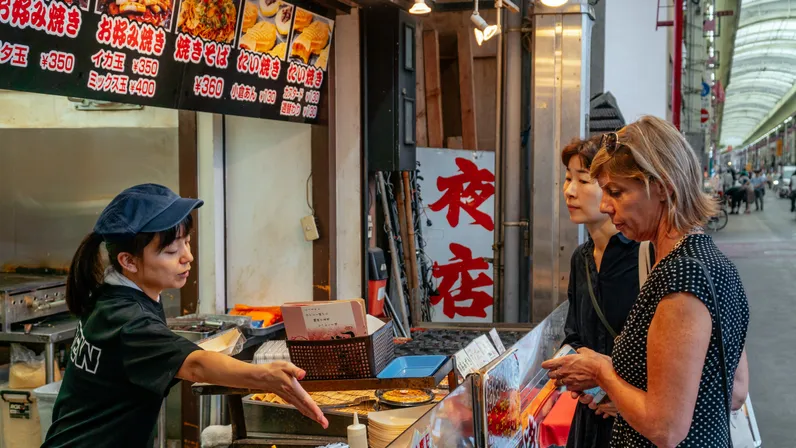
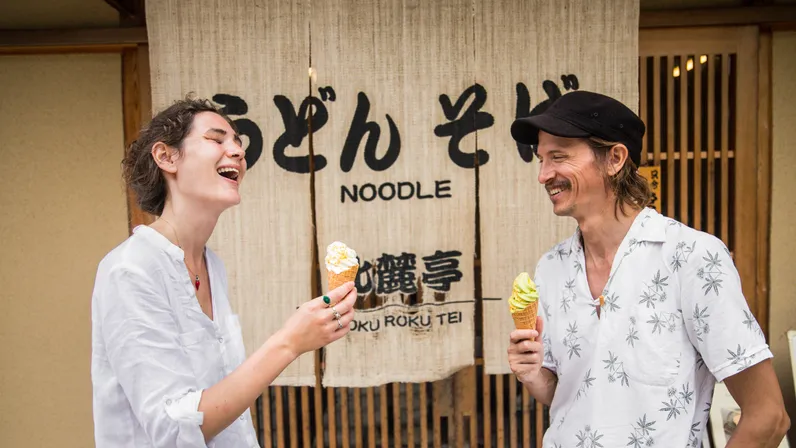
From there you walk into Demachi Masugata, a covered shopping arcade a few streets long that has fed this neighbourhood for centuries. Your host takes you along it and you buy the picnic together, a filled rice ball or a savoury pastry, something from the pickle shop, and the mamemochi from the sweet shop with the permanent queue, which is worth joining. It is included.
Then you cross into Tadasu no Mori, the forest around Shimogamo Shrine. This is old growth woodland that has never been cleared, inside a city of 1.4 million people, and walking the long gravel approach through it under the trees is the best five minutes in north Kyoto. Your host explains what a Shinto shrine is actually for as opposed to a temple, what people are asking for at the small subsidiary shrines, and the story of the Aoi Matsuri, one of Japan's oldest festivals, which starts here.
You finish back on the riverbank and eat.
A practical note: this is an outdoor tour and it is much better in dry weather. Your host will move it under the arcade or into a tea house if the rain sets in. The shrine grounds are free; the inner treasure hall is not included and is rarely open.