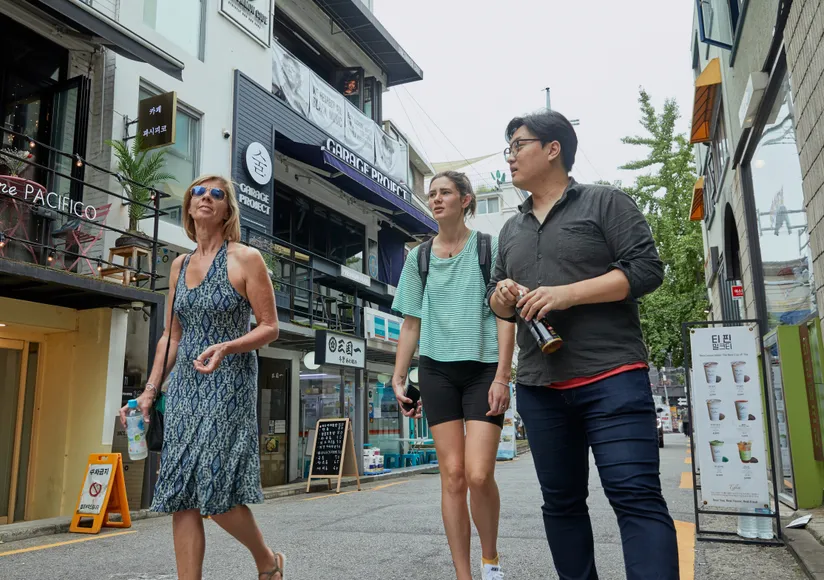
Seongsu-dong was where Seoul made its shoes. Hundreds of small workshops, brick warehouses, printing works and metal shops, on the wrong side of the river from everything fashionable. Around 2014 the rents were cheap enough that cafes and studios started moving in, and the district is now the most talked-about part of Seoul. It is also, right now, still half a working industrial neighbourhood, which is what makes it worth walking rather than reading about.
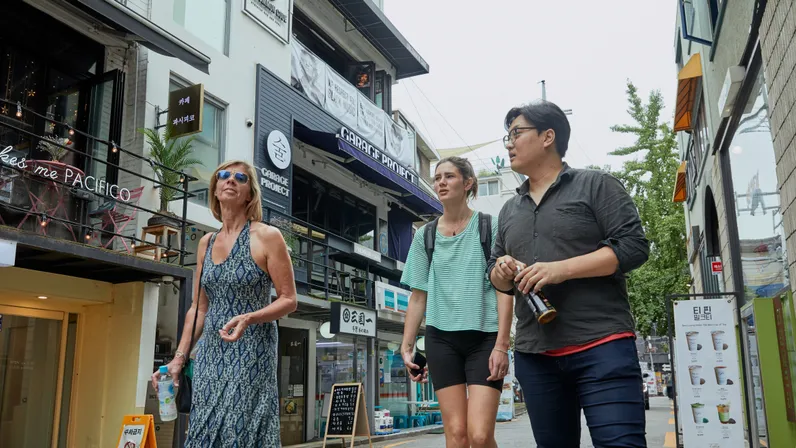
You meet your host at Seongsu station and walk into the grid. Your host explains what the buildings were, how to spot an original factory conversion from a new build pretending to be one, and why the district looks the way it does: red brick, exposed beams, roller shutters, and a lot of concrete left deliberately raw.
Then the coffee, which is the other reason people come. Korea has more cafes per person than almost anywhere and Seongsu is where the serious roasters are. You stop at one in a converted factory for a coffee and something sweet, both included, and your host explains the Korean cafe economy, why the spaces are so large and so designed, and how a cafe here is a social venue rather than a coffee shop.
You walk the shoe alley, where the remaining workshops still operate, some of them making for brands you would recognise, and your host talks honestly about what has happened to the original businesses as the rents have gone up. It is the same story as every creative quarter anywhere, and it is playing out here in real time.
You finish in Seoul Forest, the riverside park at the western edge, built over a former racecourse and water treatment works, where the neighbourhood comes to sit.
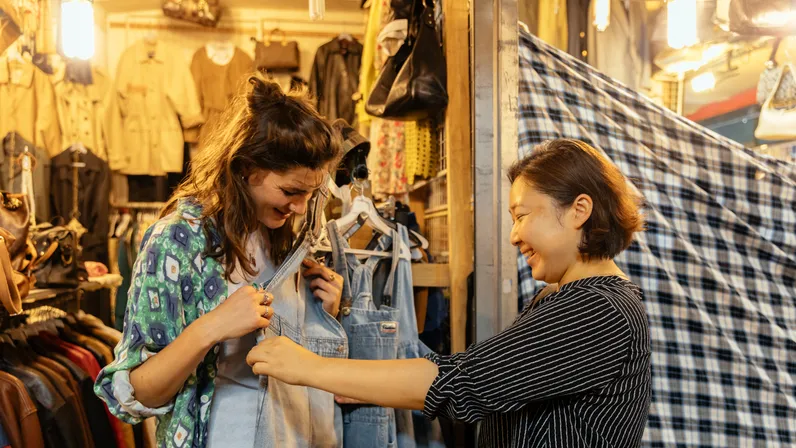
A practical note: the pop-up stores and flagship spaces here change constantly, some require advance booking and some are gone within months, so your host picks what is actually open and interesting on the day rather than working from a fixed list. Many places are closed on Mondays.