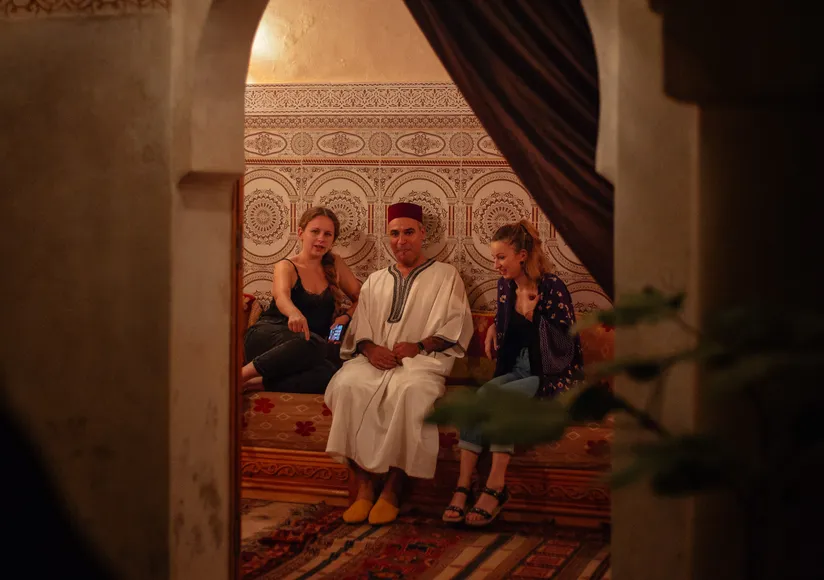
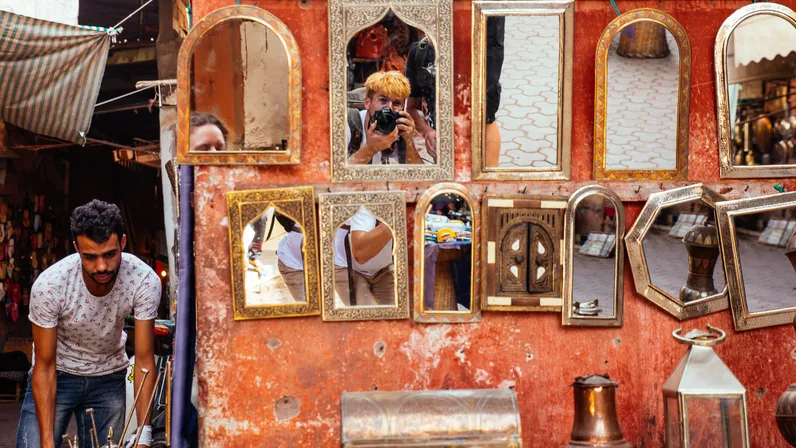
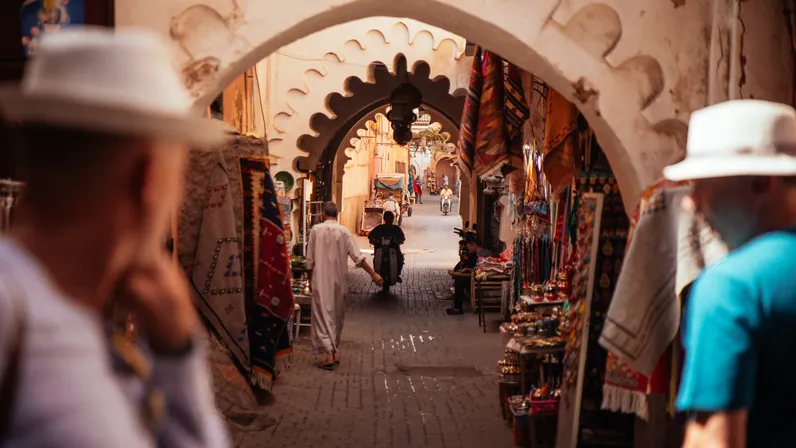
Most visitors see Fes el Bali as a maze of souvenir shops. The people who live there see a city that has worked the same way for a thousand years. Every neighbourhood, or derb, has five things within a few steps of each other: a mosque, a fountain, a hammam, a communal bread oven and a Koranic school. Once your host shows you the pattern, you start seeing it on every corner.
You meet at Bab Bou Jeloud and walk straight to the Bou Inania Madrasa, where the thirteen brass bowls of a medieval water clock still hang on the wall across the lane. Your host explains how the Oued Fes river was split into hundreds of channels under the medina, feeding fountains, houses and workshops long before most European cities had running water.
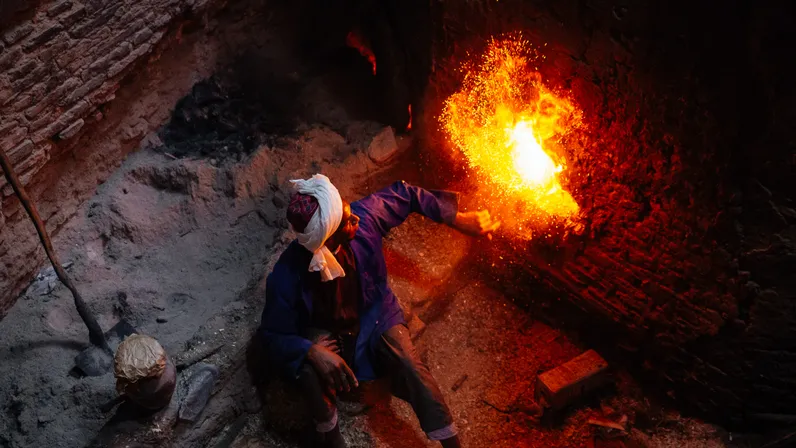
Then you walk down Talaa Kebira, the main lane, and step off it into the working parts of the neighbourhood. You watch families drop off trays of dough at a ferran, the communal wood oven, and collect them baked an hour later, each loaf marked so the baker knows whose it is. Your host shows you the furnace room behind a hammam, where the same fire heats the bath water, and the fondouks, the old merchant inns where mules still unload. You try the bread or a warm msemen with a glass of mint tea, both included.
The walk ends near the Al-Attarine Madrasa and down at Bab Rcif, where the river that feeds all of this was covered over in the twentieth century and where the medina's biggest food market begins. Your host points you to the best places for lunch.
A practical note: the lanes are narrow, uneven and slope downhill, and you will step aside for donkeys and handcarts. Madrasa entrances are not included. Many ovens and hammams are quieter on Fridays around midday prayer.