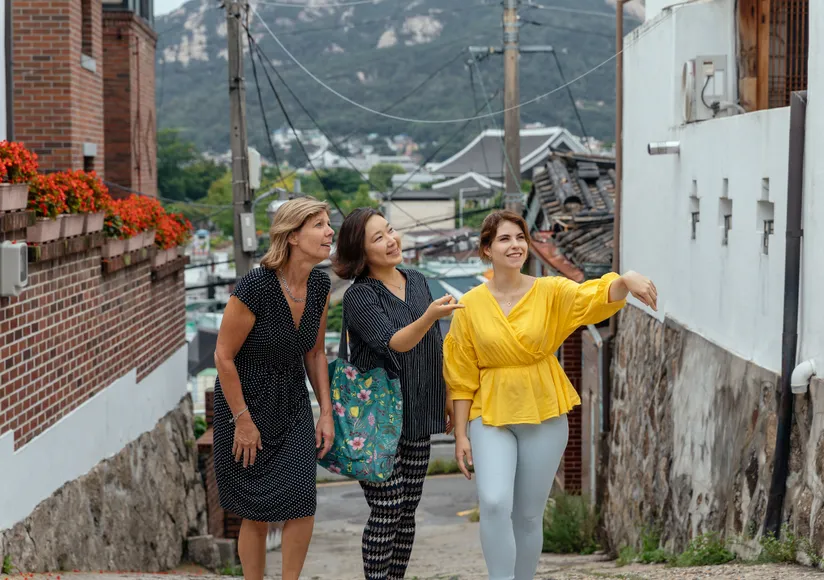
Gamcheon Culture Village is the image on half of Busan's postcards, pastel houses stacked in terraces down a steep hillside, painted in blues, yellows and pinks with the sea in the distance. The village grew by a simple rule, every house is built low and offset so no home blocks a neighbour's view, and a web of stair alleys connects them all. Most visitors see the main street and the famous statue and leave within an hour. With a local you see how the whole place fits together, and why it looks the way it does.
The story starts in the 1950s. Refugees from the Korean War and followers of the Taegukdo religious community settled this slope above Busan's port and built their houses by hand, terrace by terrace. For decades it was one of the city's poorest corners. In 2009 a public art project brought students and artists into the alleys, murals and sculptures went up, and the village turned its history into its identity instead of being cleared for apartment blocks. Your host walks you through that whole arc, from wartime refuge to art village, and what the change has meant for the people who never left.
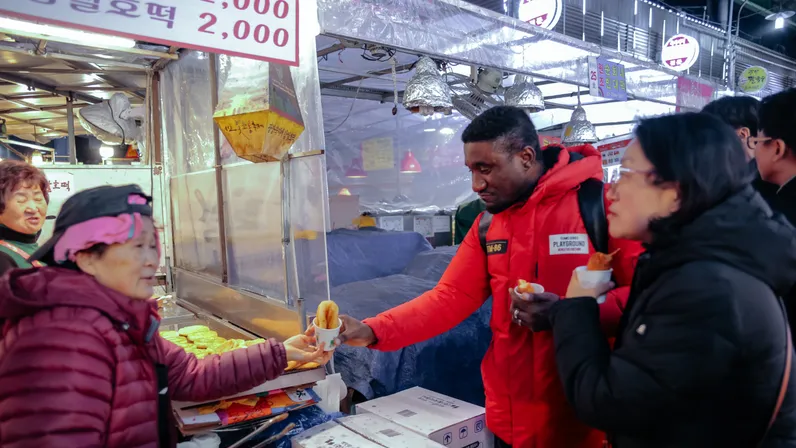
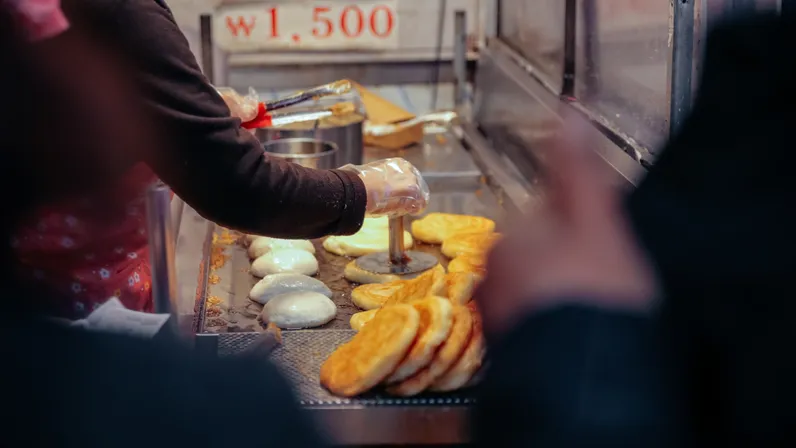
You start at the information center, where your stamp map is included, a small purchase that funds village community projects. From the main terrace you get the full view over the rooftops, and your host times the Little Prince and Desert Fox statue to dodge the worst of the queue. Then you leave the main street for the part most visitors miss, the mural alleys, the art houses hidden in old homes, and the small shops of the village's everyday streets, with a warm ssiat hotteok, Busan's seed filled pancake, included from a local stall along the way.
Be aware that Gamcheon is a real hillside village, the route involves steep stairs and narrow alleys throughout, so it is not suitable for wheelchairs or strollers, and good shoes matter. It is also a living neighbourhood, your host keeps the group considerate in residential lanes. Photo terraces get busy from late morning, so an earlier start is the quieter one.