Agra is not only Shah Jahan's city. His grandfather Akbar built the empire, and his tomb at Sikandra, on the northern edge of town, is one of the most interesting buildings in India and one of the least crowded. This morning tour pairs it with something even fewer visitors know about, a marble temple a few kilometres away that is still being built today.
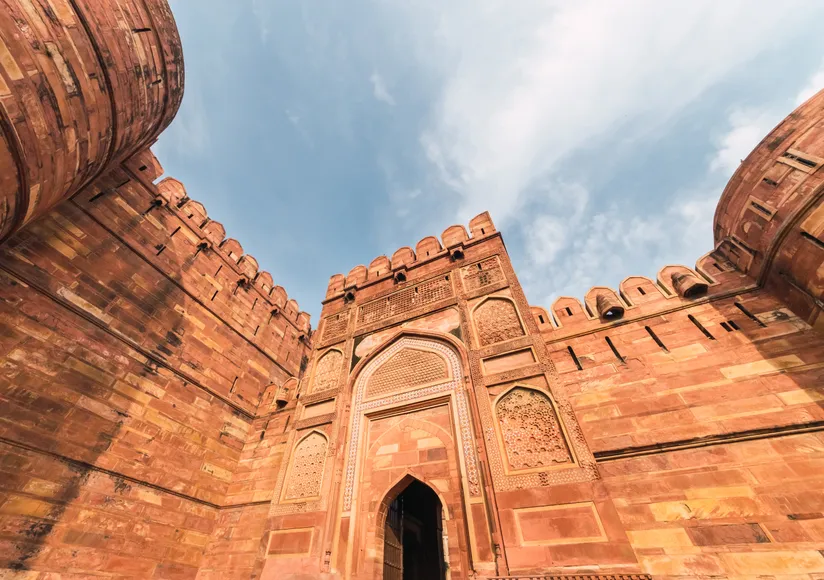
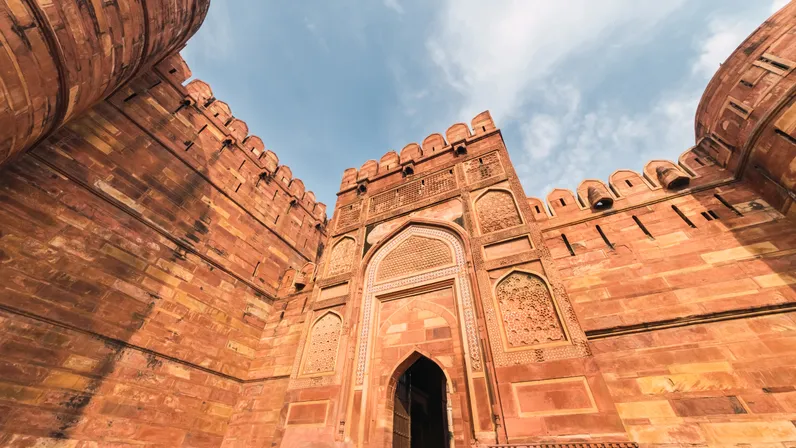
You meet your host at the south gate of Akbar's Tomb. The gateway alone, with its four white minarets and inlaid stone patterns, was a first in Mughal building. Inside the walled garden, blackbuck antelope and langur monkeys wander between the paths. Your host explains how Akbar, a Muslim emperor who invited Hindus, Jains and Christians to debate at his court, planned a tomb that mixes all their building traditions, and takes you down the long ramp to the plain chamber where he is buried.
Then you hop into a hired e-rickshaw for the twenty minute ride east to Soami Bagh, the headquarters of the Radhasoami faith. Their samadh, a white marble memorial temple, was started in 1904 and craftsmen are still carving it. Your host tells you who the Radhasoamis are, how the work is funded and done by followers, and why the marble inlay here is described as a rival to the Taj.
You finish nearby with a chai or a lassi, both included, while your host answers your questions and helps you plan the rest of your day.
A practical note: the Soami Bagh temple can be seen from its grounds, photography is restricted in parts of the site and modest dress (covered shoulders and knees) is expected. Getting to Sikandra and back from Soami Bagh is not included; your host can help you book an auto rickshaw or taxi. The tomb garden is flat but the ramp to the burial chamber is dim.